Tinubu: My Administration Shields No One From the Law
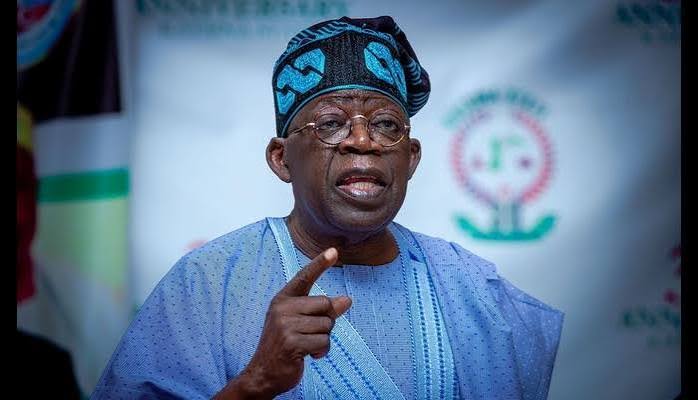
President Bola Tinubu has reaffirmed his administration’s unwavering stance against corruption, declaring that no individual or group—regardless of political affiliation—is being protected from prosecution or investigation under his government.
Speaking in Abuja on Monday at the opening of a workshop jointly organised by the Economic and Financial Crimes Commission (EFCC) and the National Judicial Institute (NJI) for justices and judges, the President stressed that the rule of law remains central to his leadership. Represented by Vice President Kashim Shettima, Tinubu assured that the administration does not interfere in judicial or anti-corruption processes.
He stated, “This government does not shield anyone from legal scrutiny because of political alignment. We respect the constitutional powers of the judiciary and anti-graft agencies to act independently.”
The President acknowledged public frustration over delayed rulings in high-profile corruption cases, especially when compared to the swift handling of cybercrime prosecutions. He urged the judiciary to remain impartial, firm, and above reproach, warning that the collapse of any society begins when its judiciary is compromised.
Tinubu highlighted the moral and constitutional importance of the judiciary, saying, “We derive our moral compass from the judiciary. It must remain the last sanctuary of our collective conscience, with full autonomy and respect.”
He noted the success of anti-corruption efforts so far, revealing that the EFCC had secured over 7,000 convictions and recovered assets worth more than ₦500 billion within his first two years in office. These proceeds, he added, are being reinvested into social programmes such as the Students Loan and Consumer Credit Schemes.
Addressing the rapid evolution of financial crimes in the digital age, Tinubu stressed the need for judges to continuously update their knowledge, especially in areas like cryptocurrency and blockchain-based fraud.
“Justice in a cryptocurrency fraud case demands a solid understanding of the technology involved. Learning is now essential, not optional, for relevance in this era,” he said.
The President reminded judicial officers that corruption impacts all Nigerians equally, regardless of their profession or social status. “Judges do not have separate hospitals, roads, or communities insulated from the effects of corruption. We all suffer its consequences,” he added.
Judiciary, Legislature React
Chief Justice of Nigeria and NJI Board Chairperson, Justice Kudirat Kekere-Ekun, reinforced the judiciary’s critical role in national development, urging judges to apply constitutional tools decisively and avoid delays in justice delivery. She emphasised the importance of public trust, noting that the judiciary’s credibility lies in its impartiality.
Senate President Godswill Akpabio, represented by Senate Chief Whip Mohammed Monguno, reiterated that fighting corruption requires a coordinated approach from the judiciary, legislature, and the public. He assured that the National Assembly remains committed to supporting law enforcement agencies in their fight against corruption.
EFCC Chairman and NJI Comment
EFCC Chairman, Ola Olukoyede (SAN), praised the judiciary for its role in the agency’s successes, citing a Supreme Court ruling that reinforced the commission’s anti-corruption mandate. He noted that the EFCC had recorded 4,111 convictions and significant asset recoveries thanks to an effective legal system.
NJI Administrator B.A. Adejumo described the workshop as a milestone in the ongoing battle against corruption, stressing that no nation can thrive without tackling financial crimes head-on.
Presidential Support for Legal Education
In a related development, President Tinubu approved the construction of a new auditorium at the Nigerian Law School in Abuja. Minister of the Federal Capital Territory (FCT), Nyesom Wike, made the announcement during the launch of a new 600-capacity student hostel at the Bwari campus.
According to Wike, the president’s swift approval came after concerns were raised about limited space in the existing auditorium. He praised Tinubu’s responsiveness and commitment to strengthening legal education.
“This shows that when issues are properly presented, a responsive leader like Mr. President acts quickly,” Wike said, pledging to deliver the hostel project within 12 months.
Attorney General of the Federation and Minister of Justice, Lateef Fagbemi (SAN), commended both Tinubu and Wike for their continued investments in legal infrastructure. He highlighted the administration’s four major interventions in the Law School so far as proof of its commitment to the "Renewed Hope Agenda."
Director-General of the Nigerian Law School, Professor Isa Hayatu Chiroma (SAN), expressed appreciation to the president and FCT minister, noting that the new projects would significantly improve legal training and the learning environment.
By Ibrahim B.Benita
#UTVAfrica#