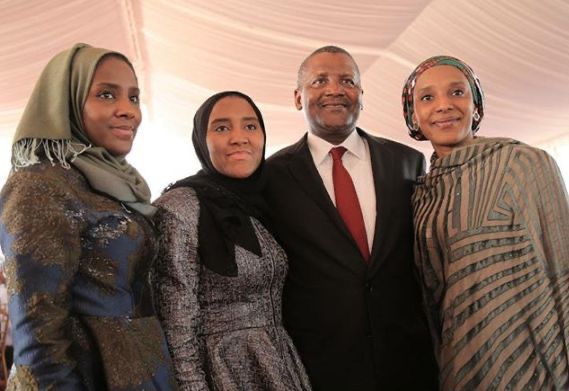
THE HEIRESSES OF THE DANGOTE DYNASTY
In the traditional halls of African enterprise, succession has long been whispered in the masculine. For decades, the "business titan" archetype was a father building an empire for his sons to inherit, while daughters were often groomed for "softer" lives of diplomacy, domesticity, or decorative board seats, but on February 17, 2026, Africa’s richest man, Aliko Dangote, shattered that script. In a series of high-level appointments that sent shockwaves through the Nigerian Stock Exchange and global markets, Dangote elevated his three daughters, Halima, Fatima, and Mariya, to the very engine rooms of his $30-billion empire. This isn't just a family promotion; it is a calculated, $100-billion gamble on the intellect and grit of the African woman.
The architecture of this transition is built on high-pressure technicality rather than honorary titles. Halima Aliko Dangote, the newly minted Group Executive Director of the Family Office and International Offices, now commands the group’s footprint in London and Dubai. A KPMG alumna with a Harvard pedigree, Halima is no stranger to high-stakes turnarounds, having famously pivoted Dangote Flour Mills from a loss-making entity to a profitable sale. Meanwhile, Fatima Aliko Dangote has taken the reins of Commercial Operations for Oil & Gas, overseeing the commercial heartbeat of the 650,000-barrel-per-day Lagos refinery, the largest single-train refinery in the world. Completing the trio, Mariya Aliko Dangote has been thrust into the core of the group’s legacy industries, Cement and Foods, where she is tasked with ensuring the group’s fundamentals continues to fund its grander global ambitions.
The significance of these appointments is best understood against the backdrop of a continent where millions of girls are still told that their ultimate "office" is the kitchen. Even among the wealthy, daughters are frequently steered toward fashion, PR, or philanthropy. By placing his daughters in Cement, Salt, and Petroleum—industries traditionally dominated by men—Aliko Dangote is making a profound cultural statement. He is signaling that industrial logic, from moving millions of metric tons of cargo to managing complex petrochemical supply chains, is not gendered. As one industry analyst noted, he didn't build them a boutique; he gave them the keys to the factory.
Critics of "nepotism" are quickly silenced by the trio’s extensive resumes, as these were far from overnight appointments. Each daughter underwent what amounts to a decade-long apprenticeship within the group and beyond. Halima spent thirteen years in the trenches of business analysis, while Fatima, a lawyer by training, worked at the prestigious Banwo & Ighodalo before running independent ventures. Mariya similarly rose through the strategy department, proving her mettle in risk management before earning her board seat at Dangote Cement. Their rise suggests that while the door was opened by their name, their seat at the table was earned through a grueling "internal internship."
As the Dangote Group eyes a $100 billion valuation by 2030, the narrative has shifted from one man’s hustle to institutional sustainability. For the young African woman watching from the sidelines, the message is clear: if the daughters of Africa’s richest man are expected to master the intricacies of a refinery and the logistics of a cement plant, then no boardroom is off-limits. The kitchen may have been a place of culture, but for the next generation of African women, the boardroom is where the most important meals are being made .
Timileyin Odunuga