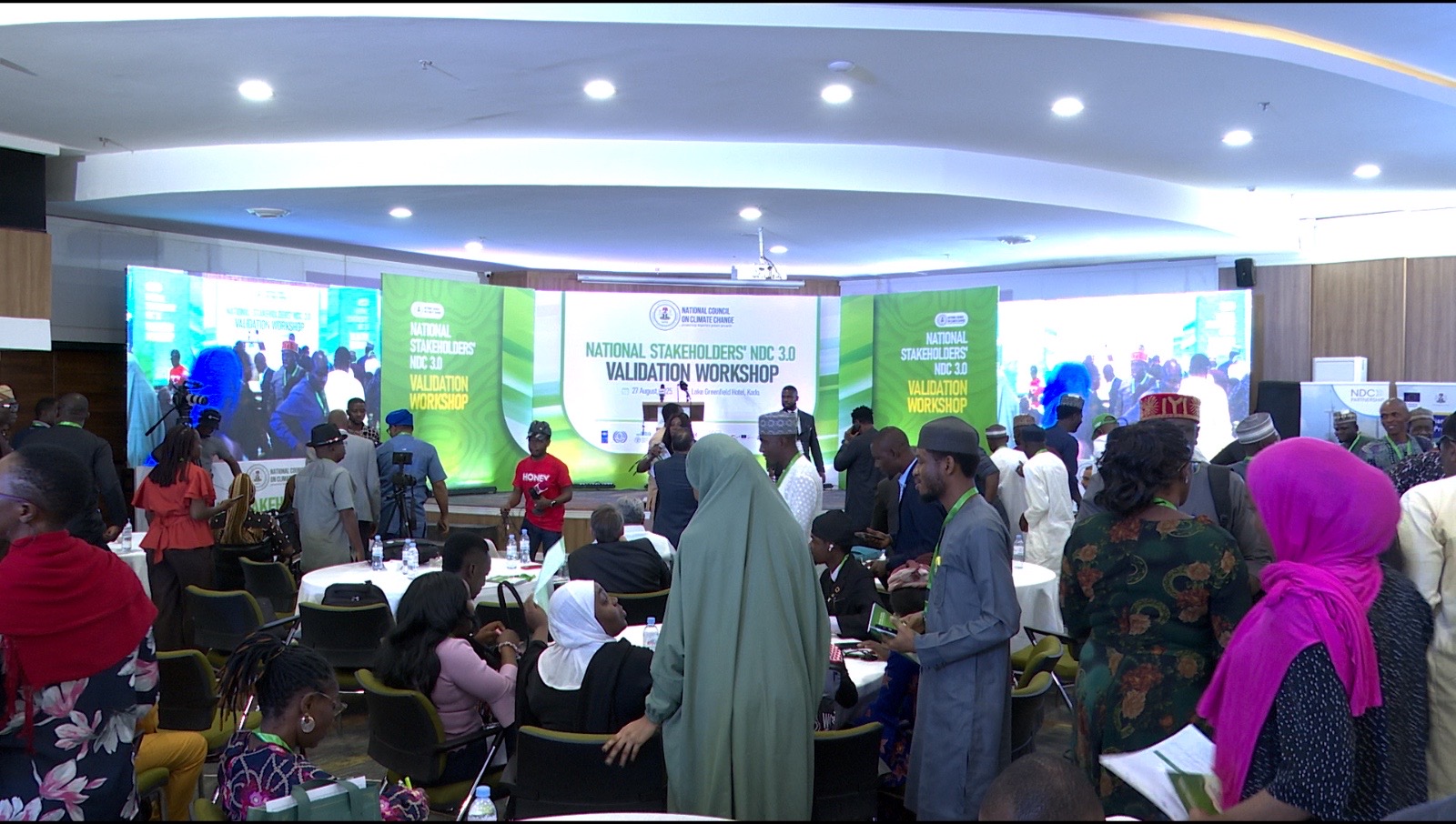
Stakeholders validate NIGERIA'S update NDC 3.0.
Nigeria has taken another decisive step in advancing its climate ambitions with the official validation of its Nationally Determined Contribution (NDC) 3.0 at a workshop held in Abuja on Tuesday.
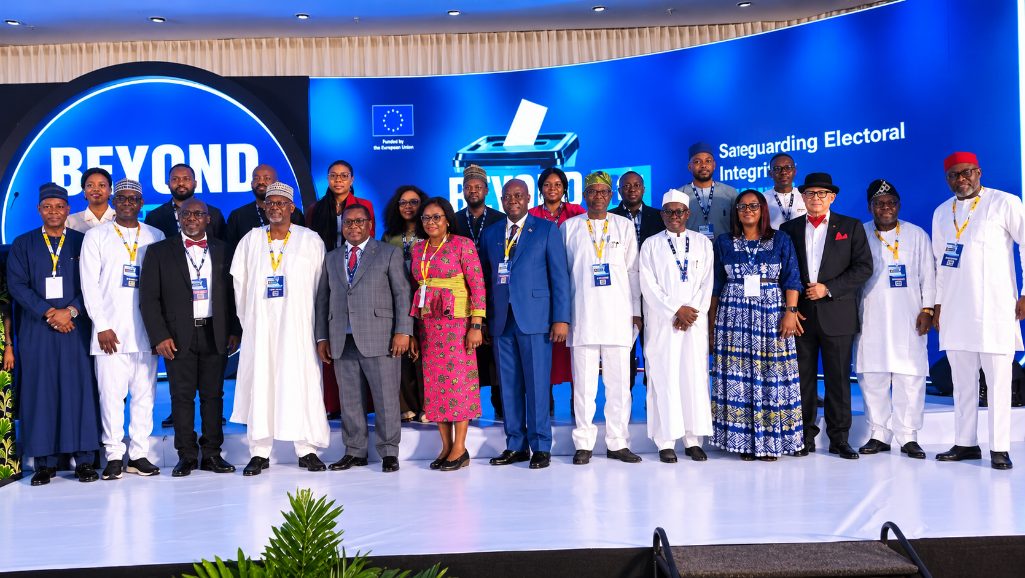
The validation event, convened by the National Council on Climate Change (NCCC) at the Lakegreen Field Hotel, Kado, brought together government officials, development partners, civil society actors, private sector representatives, youth groups, and researchers to review and endorse the country’s updated climate action plan.
Delivering the opening and welcoming remarks, the Director General of the NCCC, Barr. Teni Majekodunmi, described the NDC 3.0 as a vital roadmap that reaffirms Nigeria’s commitment under the Paris Agreement to cut greenhouse gas emissions and strengthen resilience to climate change.
“Today’s workshop is the culmination of months of technical work, stakeholder consultations, and inter-agency collaboration,” Majekodunmi stated. “The NDC 3.0 builds on previous versions, aligns with our Long-Term Low Emission Development Strategy (LT-LEDS) and Energy Transition Plan, and reflects both ambition and inclusivity.”
He stressed that climate action is not the responsibility of government alone but a shared task requiring contributions from all sectors of society. He urged participants to engage in frank and constructive discussions to ensure the final document reflects Nigeria’s priorities and realities.
Key Priorities Highlighted
The NCCC Director General outlined three critical enablers for the successful implementation of NDC 3.0:
- Financing Needs: Nigeria will require tens of billions of dollars over the next decade to implement its climate commitments across energy, agriculture, transport, industry, oil and gas, water resources, and health. Majekodunmi called for a mix of domestic financing, public-private partnerships, and access to international facilities such as the Green Climate Fund and Adaptation Fund.
- Capacity Building: He emphasized the need for systemic and continuous investment in human capital, institutional strengthening, data systems, gender-responsive actions, and monitoring and evaluation frameworks.
- Technology Development and Transfer: The workshop underscored Nigeria’s need for access to affordable, context-appropriate climate technologies, ranging from renewable energy systems and efficient agriculture to early warning systems and low-carbon transport solutions. He called on developed countries to honour their obligations under the Paris Agreement, while also urging support for local innovation.
Development Partners Applauded For Majekodunmi extended special appreciation to Nigeria’s development partners — including UNDP, NDC Partnership, FCDO, GIZ, UN Women, FAO, UNICEF, EU Delegation, the Netherlands Embassy, and the International Labour Organization (ILO) — for their consistent support in shaping and financing Nigeria’s climate agenda.
Urgency of Action
With the climate crisis intensifying, the Director General cautioned that the window for meaningful intervention is narrowing.
“The time for talk is over. Our actions today will shape the future of generations to come. This validation is about ensuring that Nigeria’s NDC 3.0 is inclusive, realistic, ambitious, and implementable,” he declared.
The workshop concluded with a collective commitment by stakeholders to ensure that the updated NDC serves not only as a policy framework but also as a practical instrument for green growth, inclusive development, and Nigeria’s leadership in Africa’s climate action efforts.
#UTVAfrica#