Retired Military Generals Support State of Emergency to Tackle Insecurity
Several retired senior military officers have thrown their weight behind former Chief of Defence Staff, General Lucky Irabor (retd), who recently called for the declaration of a state of emergency to decisively confront the Boko Haram insurgency in Nigeria.
In his newly released book, Scars: Nigeria’s Journey and the Boko Haram Conundrum, Irabor argued that the lack of political will had severely weakened Nigeria’s ability to tackle the insurgency. He proposed an emergency proclamation—endorsed by the National Assembly—as a way to mobilise all components of national power and restore security.
“The government has yet to summon the political will and necessary instruments to declare a full-scale war against Boko Haram,” Irabor wrote. “With a state of emergency backed by the National Assembly, the government would be compelled to channel all elements of national power—economic, political, social, diplomatic, informational, and military—towards ending the war.”
He stressed that strategic coordination from the top is essential, warning that victories at the operational and tactical levels are meaningless without clear strategic direction.
Despite significant military operations that have killed many Boko Haram commanders and captured hundreds of fighters, the group continues to escalate attacks in northern Nigeria. Just last week, Boko Haram took control of Kirawa, a border town in Borno State, forcing thousands of residents to flee to neighbouring Cameroon. The militants also destroyed a military barracks, local homes, and the palace of the district head. Over 5,000 people were displaced by the attack.
In a separate incident, four soldiers were killed during an attack on an army base in Borno, while a coordinated assault on security forces in Banki was repelled, with one police officer injured.
Borno State Governor Babagana Zulum has since called for increased military presence in border communities, stressing the urgent need for reinforced security in the region. Currently, over 2.2 million people remain internally displaced due to the prolonged conflict.
Retired Officers Back Irabor’s Call
Retired Brigadier General Peter Aro described Irabor’s suggestion as both timely and practical, saying it reflects a deep understanding of Nigeria’s complex security terrain.
“A state of emergency, properly declared and backed by legislation, would bring much-needed urgency and coherence to the fight against insurgency,” Aro said. “But it must be real—not the kind where political officeholders continue business as usual. Security must take full control, with clear authority and no political interference.”
Retired Major General Dayo Olukoju also supported Irabor’s call but emphasized that the emergency declaration should be part of a broader, multilateral response.
“A state of emergency is valid, but it must be complemented by efforts to tackle the root causes of terrorism,” Olukoju said. “Issues of freedom, identity, marginalisation—all these must be addressed. Security alone won’t fix it.”
Retired Colonel Saka Folusho echoed the sentiment, warning that a state of emergency alone would not solve the problem without addressing illegal arms trade, underfunding of troops, and lack of accountability.
“It’s fine to declare an emergency, but we must also confront the supply of arms that fuel this violence,” Folusho said. “Commanders need clear responsibilities, soldiers must be adequately paid and equipped. N50,000 monthly without full gear is not enough.”
He welcomed the Army’s move toward boosting local arms production but said more sustained investment is needed.
Northern Elders, Lawmakers Join the Call
The Northern Elders Forum reiterated its earlier demand for a state of emergency on security, particularly in the northern region. Spokesperson Prof. Abubakar Jiddere stressed that the declaration wouldn’t suspend governance, but would enable the massive deployment of security forces.
“The Federal Government must act now,” Jiddere said. “We need a large-scale deployment of police, military, and security personnel, especially in states like Zamfara, Katsina, Niger, Kwara, Benue, and Borno. It is a national emergency.”
Meanwhile, Kwamoti Laori, a member of the House of Representatives from Adamawa State, suggested a different solution—state policing. He argued that local police, familiar with their communities, were effective in the 1960s and could be again if properly managed.
“In my area, we had what was called ‘Friday Police’ who operated on market days. They knew the criminals personally and were feared,” Laori said. “Community involvement in recruitment and deployment will prevent political abuse.”
ADC Slams Tinubu Government Over Insecurity
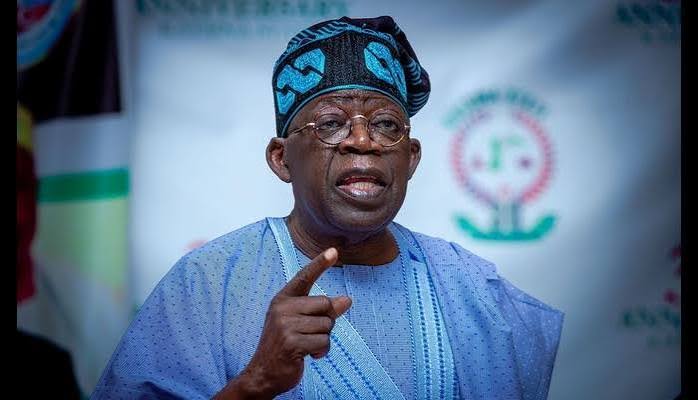
The African Democratic Congress (ADC) has criticized President Bola Tinubu for what it described as a lack of urgency in dealing with worsening insecurity nationwide.
In a statement posted on Sunday, the party’s National Publicity Secretary, Bolaji Abdullahi, accused the President of neglecting his duties as Commander-in-Chief while communities across the country are being ravaged by banditry, terrorism, and kidnappings.
“While attacks are increasing, the President continues to attend social and political events. This is irresponsible and unacceptable,” the ADC said.
The party pointed out that nine local governments in Kwara State have recently experienced bandit attacks, while similar violence was recorded in Kogi, Plateau, Zamfara, Benue, Kaduna, and Niger. It also revealed that more than 180 schools in northern Nigeria have been shut due to insecurity.
“The government’s repeated claims of progress are contradicted by daily killings and abductions,” Abdullahi said. “The administration must stop pretending. What Nigerians need now is responsible leadership, operational urgency, and measurable results.”
APC Responds: Nigeria Is Making Progress
In response, the All Progressives Congress (APC) dismissed the ADC’s statement as politically motivated and untrue. The party’s Director of Publicity, Bala Ibrahim, said the Tinubu-led administration is making steady progress in tackling insecurity.
“ADC is desperate because they have failed to win public support,” Ibrahim said. “The country is moving from insecurity to greater security. Yes, there are still challenges, but the government is acting fast.”
He cited the recent arrests of high-profile kidnappers and criminal leaders as evidence of ongoing efforts to dismantle violent groups across West Africa.
“These individuals are in custody, and their confessions are helping security agencies prevent further attacks,” Ibrahim stated. “Nigerians understand the government is serious about security, regardless of what the ADC claims.”
#UTVAfrica#