Nnamdi Kanu seeks to halt terrorism trial judgment
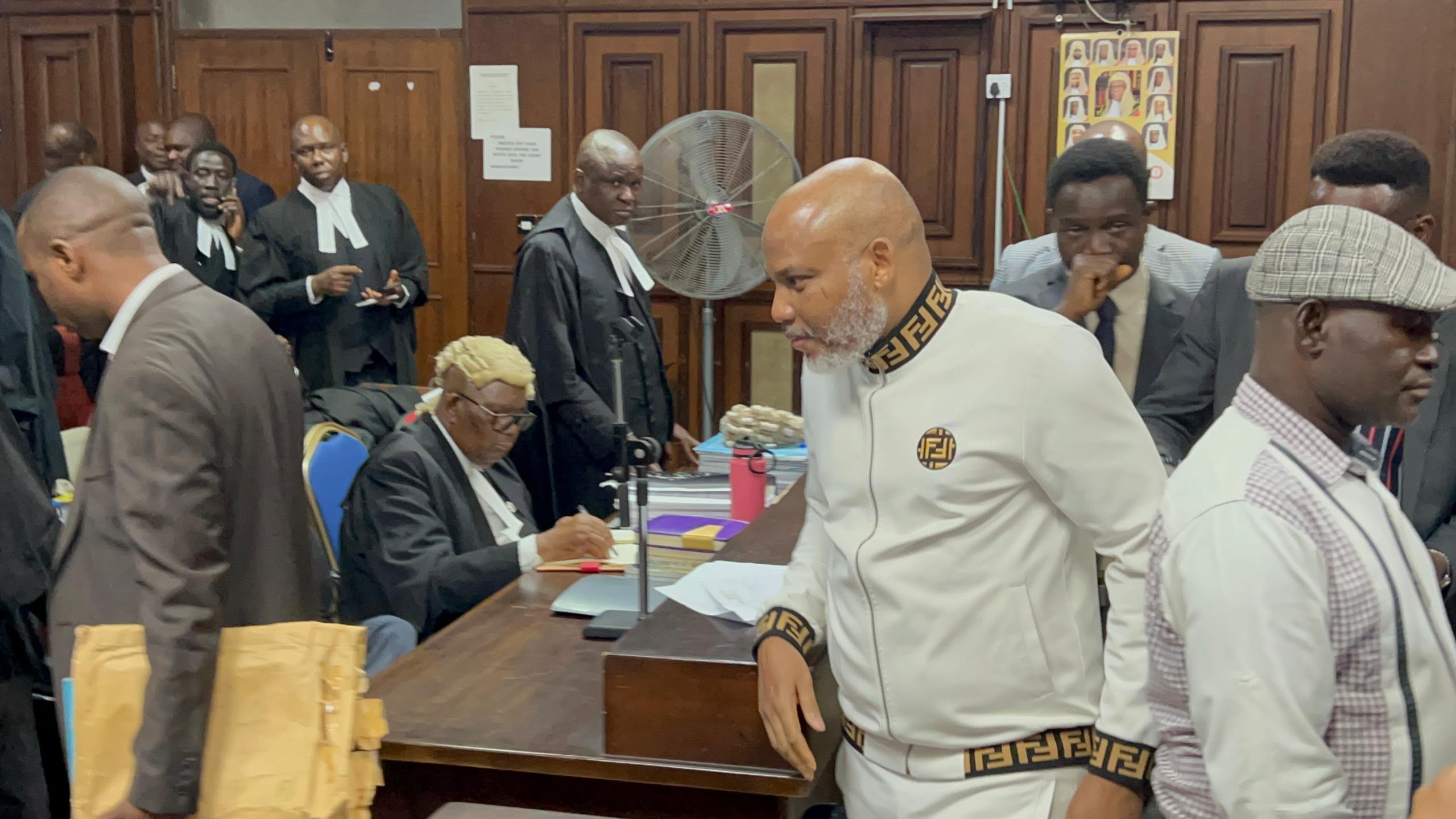
The detained leader of the Indigenous People of Biafra (IPOB), Nnamdi Kanu, has approached the Federal High Court in Abuja seeking to stop the court from delivering judgment in the terrorism case brought against him by the Federal Government. Kanu, a prominent separatist figure, faces a seven-count terrorism charge alleging that he led a movement aimed at secession of the South-East, parts of the South-South, and certain communities in Kogi and Benue states from Nigeria.
The Federal Government’s charges against Kanu also include incitement to violence and killings through broadcasts allegedly transmitted nationwide and the illegal importation of a radio transmitter. Throughout the trial, Kanu has maintained his innocence, pleading not guilty to all the charges.
During the proceedings, the prosecution concluded its case after calling five witnesses. Kanu had initially listed 23 individuals he intended to summon in his defence. However, he later withdrew this list, asserting that he would not present a defence for charges he claims are invalid and constitute offences unknown to Nigerian law.
At the most recent court sitting, Justice James Omotosho noted that Kanu had failed to open his defence despite being granted six days to do so. The judge, having provided multiple opportunities for Kanu to respond, proceeded to schedule a date for the delivery of judgment. In response, Kanu has now filed an appeal to halt this judgment, arguing that the trial process has been flawed and that the charges themselves are legally untenable.
Legal experts observing the case have highlighted the significance of Kanu’s appeal, noting that it could delay the final verdict and potentially lead to further judicial scrutiny of both the prosecution’s case and procedural aspects of the trial. The case has attracted national and international attention due to Kanu’s role as the leader of IPOB and the broader implications of the charges for issues of national security, regional autonomy, and freedom of expression in Nigeria.
The court is expected to review Kanu’s appeal before proceeding with the judgment, which has already been a point of contention between the defence and prosecution. Meanwhile, supporters of IPOB continue to monitor the case closely, asserting that any adverse judgment could have significant political and social consequences across the South-East region.
#UTVAfrica#