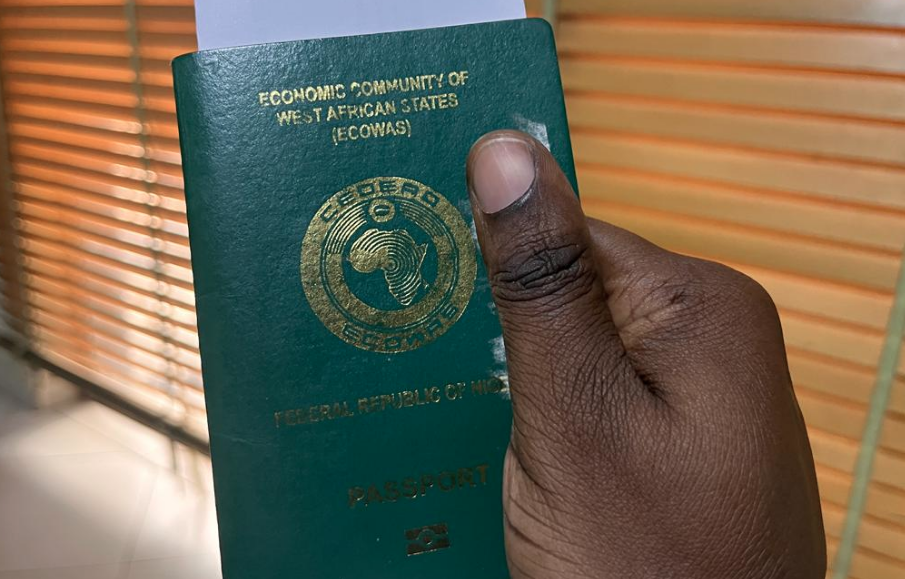
Nigeria Passport Rises in Ranking, Loses Visa-Free Access
Nigeria’s passport has seen a slight rise in global recognition, moving up six places in the Henley Passport Index since May 2023. In the April 2026 update, Nigeria is ranked 89th worldwide, an improvement from its 95th position in January 2024.
However, this upward movement in ranking has not led to an increase in travel freedom for citizens. The number of visa-free or visa-on-arrival destinations available to Nigerians has declined slightly, dropping from 46 in 2025 to 44 in the latest report.
The changes are linked to recent policy adjustments by several countries, including Ethiopia, Zambia, Zimbabwe, Lesotho, Somalia, Mauritania, and São Tomé and Príncipe, which now require Nigerians to obtain visas before entry.
According to the Henley Passport Index, which ranks 199 passports using data from the International Air Transport Association, Nigeria’s position has improved over the past two years, but its overall travel access remains inconsistent.
Between 2024 and 2026, Nigeria moved from 95th to 89th place. However, over a longer period, the country has experienced a significant decline, falling from 62nd position in 2006.
During the same period, Nigeria gained access to some destinations such as Fiji, Rwanda, Togo, Samoa, Micronesia, Palau Islands, Niue, Mozambique, and Montserrat. At the same time, it lost visa-free or visa-on-arrival access to countries like Ethiopia and Zimbabwe.
Ethiopia ended visa-on-arrival privileges for Nigerians in 2022, while Zambia now requires advance visas for all West African travellers. Similar restrictions have also been introduced by Zimbabwe, Lesotho, Mauritania, São Tomé and Príncipe, and Somalia.
Despite these setbacks, several Pacific island nations continue to maintain relatively open entry policies for Nigerian passport holders.
Within West Africa, Nigeria ranks below several neighbouring countries in terms of travel freedom, with Ghana, The Gambia, Senegal, Côte d’Ivoire, Burkina Faso, and Guinea-Bissau all offering stronger visa-free access.
Across Africa, South Africa leads the continent’s passport ranking, followed by Botswana, Namibia, Morocco, Kenya, and Ghana. Globally, Singapore holds the top position, with Japan, South Korea, and the United Arab Emirates also ranking highly, while many European countries remain in the upper tier.
At the lower end of the index, Afghanistan has the weakest passport, followed by Syria, Iraq, Pakistan, Yemen, and Somalia.
Experts explain that passport strength is largely influenced by diplomatic relations, reciprocity agreements, and regional cooperation rather than ranking shifts alone.
A former Nigeria Immigration Service official added that visa-free access depends on international agreements and mutual trust between countries, noting that Nigeria continues to work on improving passport security and alignment with global travel standards.
#UTVAfrica#