Nigeria Nominates Judge Dr. Taoheed Elias for International Court of Justice Seat
The Federal Government of Nigeria has formally nominated Judge Dr. Taoheed Elias as the country’s candidate for election to the International Court of Justice (ICJ), urging international support to restore West Africa’s presence on the world’s top judicial bench.
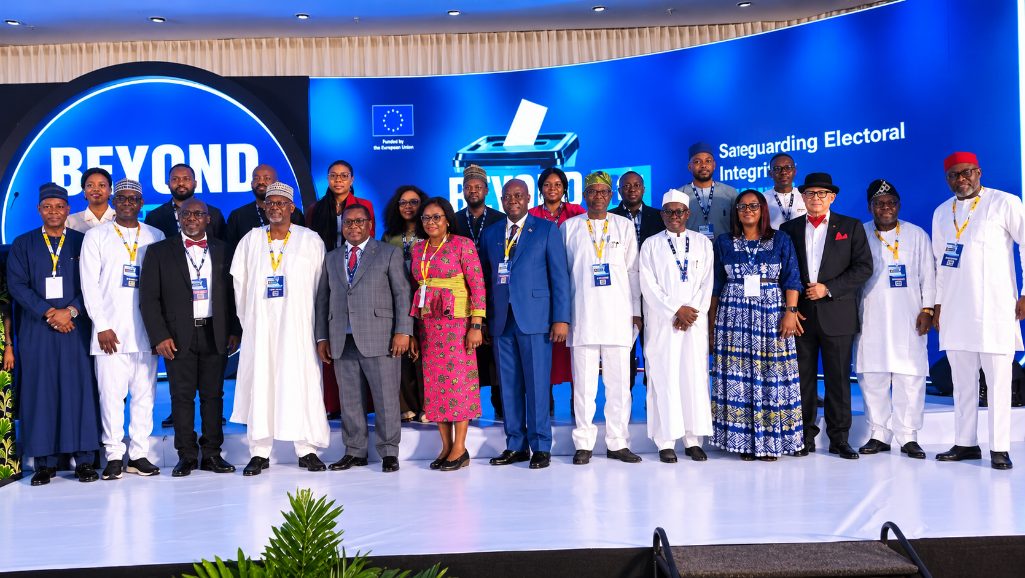
The official presentation took place on Thursday in Abuja, where Minister of Foreign Affairs, Ambassador Yusuf Tuggar, led the event attended by members of the diplomatic corps and senior government officials.
Tuggar noted that West Africa has not had representation on the ICJ since 2011, while Nigeria has been absent from the court for more than 30 years. He described this gap as a concern not of national pride but of global equity.
“This long absence is a reminder of the need for balanced geographical representation and the importance of ensuring West African voices contribute once again to global legal discourse,” the minister said.
Presenting Judge Elias, Tuggar praised him as a jurist of high moral standing, international legal expertise, and unwavering integrity, aligning with the criteria outlined in Article 2 of the ICJ Statute.
“Dr. Elias is not just Nigeria’s candidate — he is a candidate for the international community,” Tuggar said, describing him as “a seasoned international civil servant, distinguished academic, and respected judge.”
The minister emphasized that Elias’ nomination reflects core values shared by the global diplomatic community — competence, character, and a commitment to justice. He added that the nomination also symbolizes Nigeria’s broader objective of ensuring Africa’s continued influence in shaping the global legal order.
In his remarks, Dr. Elias expressed gratitude for the nomination and highlighted his career-long commitment to international law. He noted the ICJ’s vital role in upholding global peace through the legal resolution of disputes.
Outlining his qualifications, Elias pointed to three pillars of his candidacy: academic grounding in international law, extensive institutional knowledge of the UN system, and decades of judicial and legal experience.
“I bring academic rigor, deep familiarity with the UN’s inner workings, and over 20 years of practical legal service within international institutions,” he said.
Elias currently serves as a judge ad hoc at the ICJ, having been appointed by Equatorial Guinea in a recent case — a move he described as a strong vote of confidence in his credentials.
He also acknowledged the legacy of Judge Abdulqawi Yusuf of Somalia, whose departure from the ICJ opened the current vacancy. Elias emphasized the importance of bringing diverse perspectives to the bench in addressing evolving global challenges.
If elected, Elias would become the fourth Nigerian to serve on the ICJ, following Justices Charles Onyeama, Bola Ajibola, and his father, Taslim Elias — a former ICJ President.
Judge Elias is a member of the prestigious Institut de Droit International and has held numerous high-level international legal positions, including Legal Adviser and Director at the Organisation for the Prohibition of Chemical Weapons (OPCW). He currently serves as President of the Administrative Tribunal of the OPEC Fund for International Development, Chairman of the Islamic Development Bank Administrative Tribunal, and previously as President of the OPEC Appeals Committee.
The ICJ, headquartered in The Hague, is the principal judicial organ of the United Nations. It was established in 1945 to adjudicate legal disputes between sovereign states and provide advisory opinions on legal questions referred by authorized international organs.
The election for the vacant ICJ seat is scheduled to take place on November 12, 2025.
#UTVAfrica#