Fresh Outrage as Nigerians Renew Calls for Justice for 13-Year-Old Ochanya Years After Lecturer’s Acquittal
Fresh outrage has erupted across Nigeria as citizens once again demand justice for 13-year-old Ochanya Ogbanje, years after the acquittal of Andrew Ogbuja, a lecturer at Benue State Polytechnic, who was accused—alongside his son, Victor—of raping his niece to death.
The renewed wave of anger was sparked by a recent report from African digital outlet ZikokoMag, which reignited nationwide debate about what many consider a persistent failure of Nigeria’s justice system to protect minors and hold perpetrators of sexual violence accountable.
Ogbuja was cleared by a Benue State High Court, which ruled that the prosecution failed to prove its case beyond reasonable doubt. His son, Victor Ogbuja, remains at large. On April 21, 2022, two separate Benue courts delivered conflicting judgments that exposed deep flaws in Nigeria’s legal system. While the Federal High Court convicted Felicia Ogbuja, Andrew’s wife and Ochanya’s aunt, of negligence and sentenced her to five months in prison, the Benue State High Court, presided over by Justice Augustine Ityonyiman, acquitted Andrew of all charges.
Justice Ityonyiman’s verdict was based on what he described as “the failure of the police to medically match Andrew to the reports presented before the court” and on “contradictory autopsy reports.” The decision has since drawn widespread condemnation as another miscarriage of justice.
Nigeria’s Trafficking in Persons (Prohibition) Enforcement and Administration Act, 2015 clearly outlines penalties for such offences. The law states that anyone who fails to take reasonable steps to prevent human trafficking commits an offence and faces imprisonment of up to two years or a fine of ₦250,000. It also prescribes up to five years in prison or fines of ₦500,000 for obstructing investigations.
According to a BBC report, Andrew Ogbuja was first arrested in 2018 and arraigned on October 10, 2019, on four counts, including rape and culpable homicide. He pleaded not guilty. In April 2022, the court acquitted him, ruling that the prosecution failed to prove the allegations beyond a reasonable doubt. The court cited lapses in police investigation, including the failure to conduct a DNA test linking Ogbuja to medical evidence, as well as inconsistencies between two autopsy reports—one from the Federal Medical Centre, Makurdi, which listed natural causes, and another from the Nigeria Police Forensic Laboratory, Lagos, which attributed her death to complications from sexual abuse.
During the investigation, recordings emerged of Ochanya herself recounting her ordeal. At the time of her death, she was a Junior Secondary School 1 student at Federal Government Girls’ College, Gboko, Benue State. Born on March 10, 2005, in Ogene-Amejo, Benue State, Ochanya was the youngest of eleven children. When her village school shut down, her parents, Michael and Rose Ogbanje, sent her at age five to live with her aunt, Felicia, in Ugboloko, hoping she could continue her education.
Instead, she endured years of sexual abuse beginning at just eight years old. According to family accounts, the abuse was first discovered by the Ogbujas’ daughter, Winifred, who said her father later joined in the assaults after initially scolding his son. Neither Andrew nor Felicia informed Ochanya’s parents, even as her health began to deteriorate. By 2012, her condition had worsened, and by 2018 she could barely walk, suffering from continuous urine and faecal leakage. She spent her final months in diapers before dying on October 17, 2018, at age 13, from Vesicovaginal Fistula (VVF)—a condition doctors linked to prolonged sexual assault.
Her death sparked national outrage and renewed demands for justice reform and stronger protections for children. Investigative journalist Kiki Mordi, among those condemning the acquittal, said the ruling exemplifies systemic failure in Nigeria’s justice system. “I still have that nasty feeling in my throat I had when I read about little Ochanya seven years ago. She would have been 20 today. She was eight when her cousin started raping her, and after he was exposed, his father joined in. She died from VVF complications at 13,” Mordi said.
She added, “Nigeria allowed a man accused of raping a 13-year-old girl to death to walk free—and even return to teaching. His acquittal is not an anomaly. According to the National Bureau of Statistics, fewer than one in ten rape cases in Nigeria ever result in conviction.”
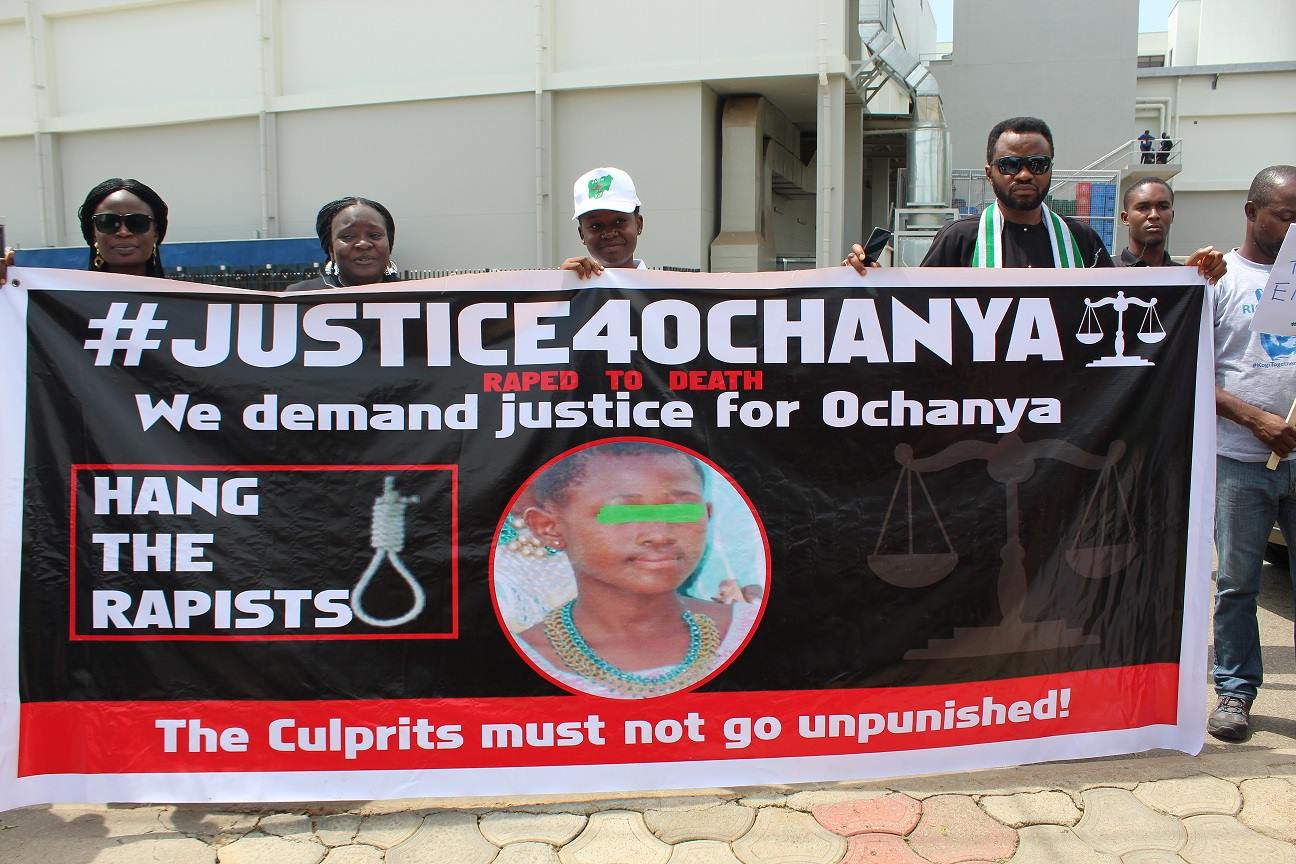
Over the weekend, outrage once again flooded social media under the hashtag #JusticeForOchanya, following a Change.org petition calling for the case to be reopened. Human rights organizations and gender advocates are urging the federal and Benue State governments to revisit the case and deliver long-overdue justice.
“Justice delayed must not remain justice denied,” one rights activist said, as calls mount for Nigeria to reform its investigative and legal frameworks to better protect children like Ochanya from systemic neglect and abuse.
#UTVAfrica#