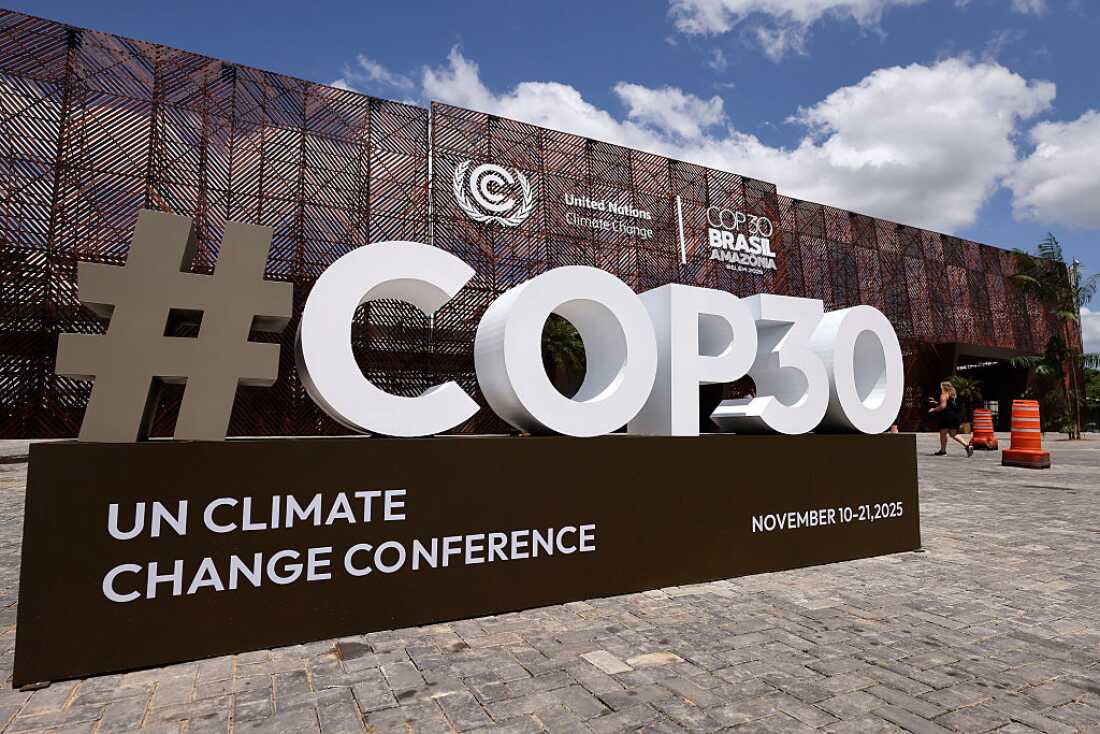
COP30 Opens in Brazil with Global Calls for Unity to Tackle Climate Crisis
The 30th United Nations Climate Change Conference (COP30) has officially opened in Belém, Brazil, with world leaders urging collective action to confront the escalating climate crisis.
Addressing delegates on Monday, UN Climate Chief Simon Stiell reminded participants that their mission was not to compete against each other but to unite against a common threat. “Your job here is not to fight one another – your job here is to fight this climate crisis, together,” he said.
The summit, held on the edge of the Amazon rainforest, is expected to draw around 50,000 participants from over 190 countries during its 12-day run. Stiell acknowledged progress made in past conferences but warned that the pace of change remains insufficient. “Lamenting is not a strategy. We need solutions,” he stressed, urging countries to accelerate their efforts to reduce greenhouse gas emissions.
A new UN analysis released ahead of the summit revealed that current national commitments fall significantly short of the reductions needed by 2035 to limit global warming to 1.5°C above pre-industrial levels—a critical threshold for avoiding the most catastrophic climate impacts.
“Climate change is no longer a threat of the future. It is a tragedy of the present,” said Brazilian President Luiz Inácio Lula da Silva in his opening address. He condemned those who continue to challenge scientific evidence and undermine environmental institutions, declaring, “It’s time to inflict a new defeat on the deniers.”
The United States, under President Donald Trump’s administration, has opted not to send delegates to COP30—a decision that former U.S. climate envoy Todd Stern described as “for the best,” arguing that American participation under current leadership would not have been constructive.
COP30 President André Corrêa do Lago noted that the U.S. absence has provided “an opportunity for the world to witness the leadership of developing countries in climate action.”
Pablo Inuma Flores, an Indigenous leader from Peru, appealed to global leaders to turn promises into tangible protection. “We don’t want more pledges. We want real protection because Indigenous people are the ones who suffer first from climate change,” he said.
In an open letter to the conference, dozens of scientists expressed alarm over the rapid melting of glaciers and ice sheets, warning that the Earth’s frozen regions—known as the cryosphere—are destabilizing faster than predicted. “Geopolitical tensions or short-term national interests must not overshadow COP30,” the letter read. “Climate change is the defining security and stability challenge of our time.”
#UTVAfrica#