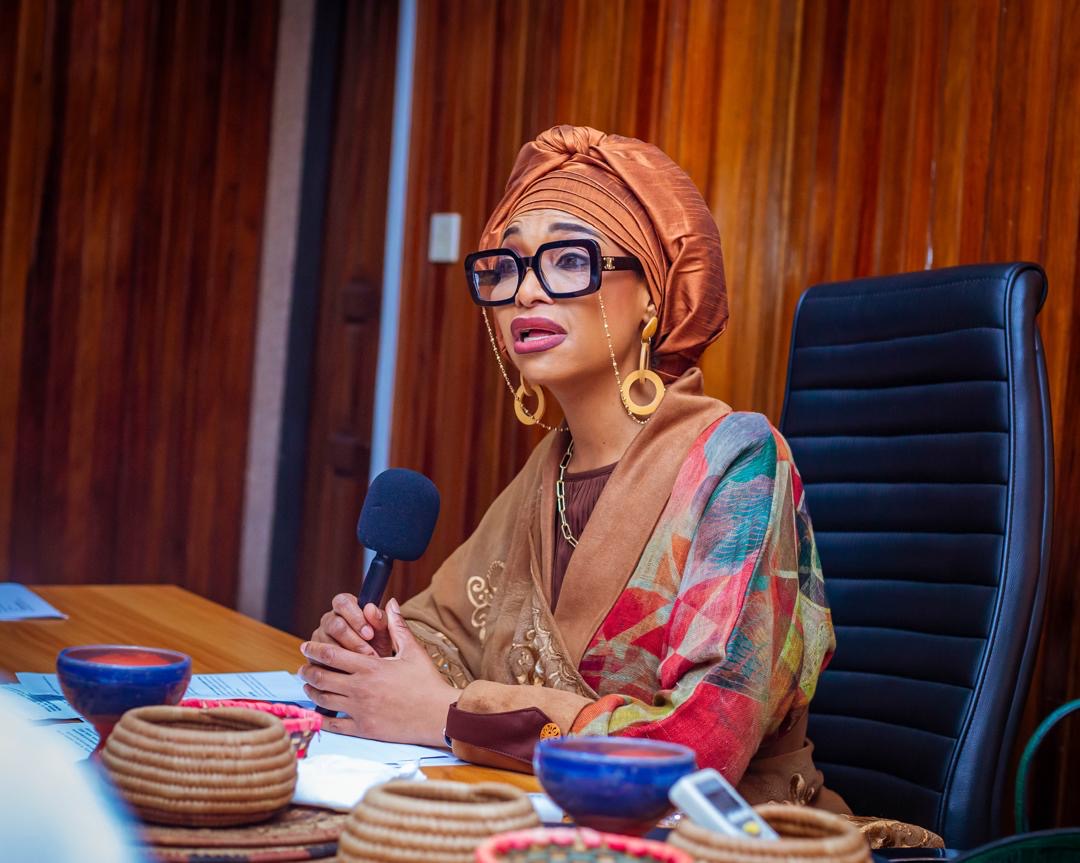
The Minister of Art, Culture, Tourism and Creative Economy, Hannatu Musa Musawa
•News•2 min read

Musawa Sets Up Four Committees to Drive Nigeria’s Creative Economy Reforms The Minister of Art, Culture, Tourism and Creative Economy, Hannatu Musa Musawa, has inaugurated four committees tasked with developing policies and financing frameworks to strengthen Nigeria’s arts, culture, tourism and wider creative sector. The committees—covering Policy & Strategy, Programmes & Implementation, Stakeholder Engagement, and Monitoring & Evaluation—were unveiled on Tuesday in Abuja. Their mandate is to address long-standing challenges in the sector, including fragmented governance, weak enforcement of intellectual property rights, and limited access to funding. Speaking at the event, Musawa noted that although Nigeria’s creative industry enjoys global recognition, it contributes only about 2.3% to the nation’s GDP. She linked the new initiative to President Bola Ahmed Tinubu’s Renewed Hope agenda, which targets a ₦100 billion GDP contribution from the sector and the creation of two million jobs by 2030. She charged committee members to develop a unified governance structure that eliminates overlaps, clarifies institutional roles, and positions the creative economy as a key driver of national growth. Musawa emphasized that their work should go beyond policy discussions and deliver practical, results-oriented outcomes for creatives and entrepreneurs across the country. Each committee is expected to submit its terms of reference along with a 90-day work plan by April 21, 2026, with quarterly public updates to ensure transparency and accountability. The minister also acknowledged the support of partners such as the Nigerian Economic Summit Group, UNESCO, and UNDP for providing technical assistance. In his remarks, the Chief Executive Officer of the Nigerian Economic Summit Group, Ikenna Nwosu, described the creative economy as a major driver of innovation, employment, and global competitiveness. He said Nigeria is well positioned to lead Africa’s creative transformation due to its rich cultural heritage and abundant talent. Nwosu stressed that the newly formed committees must deliver practical, data-driven plans that address funding gaps, improve intellectual property protection, and strengthen infrastructure. He added that their recommendations should clearly outline priorities, timelines, financing options, and implementation responsibilities. The committees will operate simultaneously, focusing on key reform areas such as harmonising government roles, drafting a comprehensive national creative economy policy, expanding financing through public-private partnerships and dedicated funds, and planning an international summit to position Nigeria as a leading creative hub. The ministry reaffirmed its commitment to working collaboratively with stakeholders to design policies that attract investment, encourage innovation, and support economic diversification through the creative industries.

Read the full article for more details...
Stay Informed with UTV Africa

Get the week's top African news and analysis delivered to your inbox every Sunday.

By subscribing, you agree to our Privacy Policy. Unsubscribe at any time.

Weekly digest
Unsubscribe anytime
Free