SSANU, NASU to Suspend Strike After FG Talks
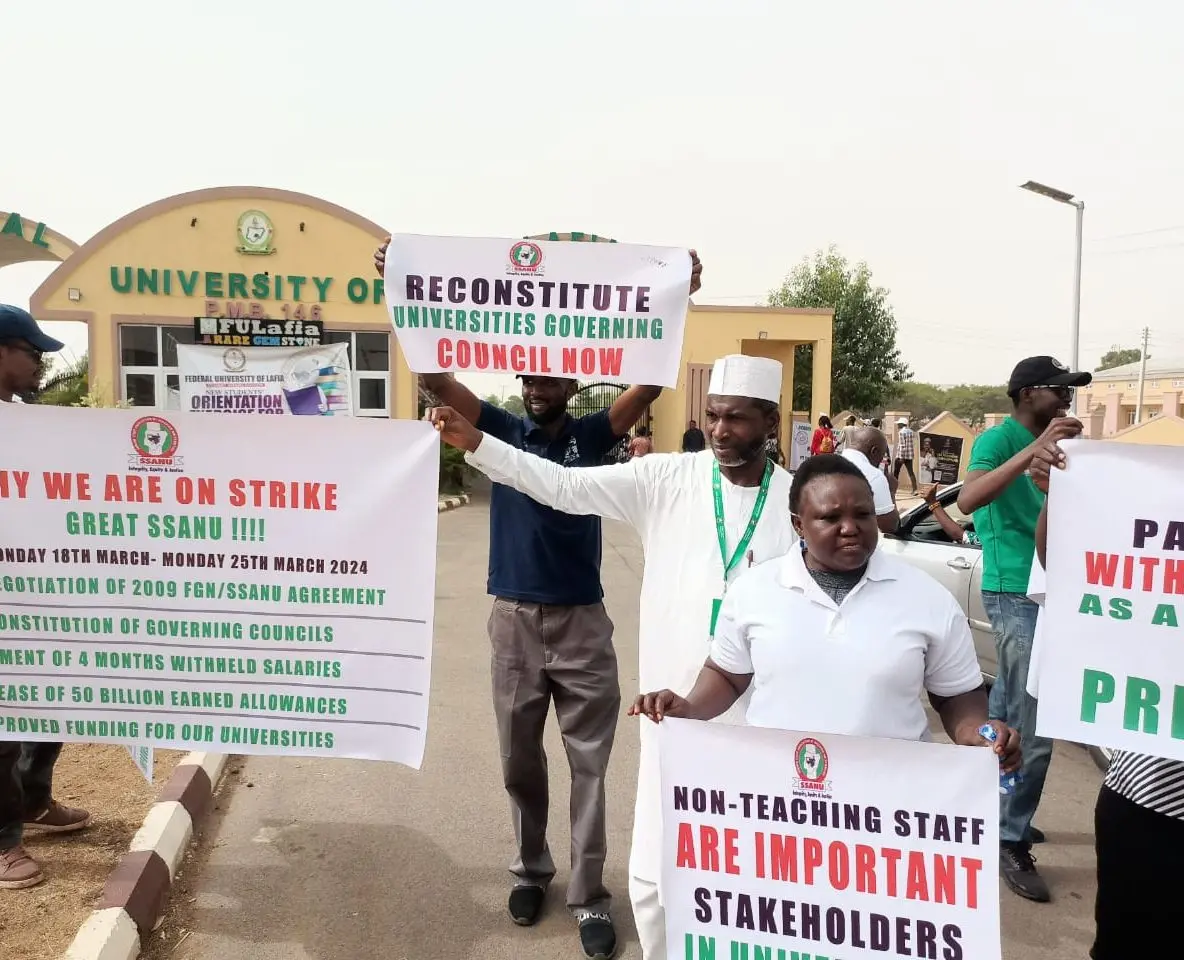
There is growing relief across Nigeria’s public universities as non-academic staff unions move to suspend their ongoing nationwide strike following renewed negotiations with the Federal Government.
The Senior Staff Association of Nigerian Universities (SSANU) and the Non-Academic Staff Union of Educational and Associated Institutions (NASU), under their Joint Action Committee, have directed branches to begin steps toward suspending the industrial action from Monday, May 11, 2026.
The decision comes after fresh dialogue between the unions and the Federal Government over key demands, including the long-delayed review of the 2009 agreement that governs salaries, allowances, and working conditions of non-teaching staff.
In a circular issued to branch leaders, the unions confirmed that progress was made during talks with the Federal Government’s Expanded Renegotiation Committee, chaired by former Head of Service, Yayale Ahmed.
The unions said government officials assured them that all outstanding issues would be concluded within two weeks once the strike is suspended. However, they noted that any further changes to earlier proposals would require approval from President Bola Ahmed Tinubu.
The circular, signed by NASU General Secretary Peters Adeyemi and SSANU National President Mohammed Ibrahim, described the development as a “significant step forward” in resolving the dispute.
It stated that discussions also touched on the controversial salary adjustment under the Consolidated Tertiary Institutions Salary Structure (CONTISS), including a previously proposed 30 per cent increase that was later withdrawn.
Branch executives have been instructed to hold congress meetings to brief members and secure approval for the suspension of the strike while negotiations continue.
The unions praised their members for maintaining solidarity throughout the industrial action, which began on May 1, 2026. The strike had disrupted essential non-academic services in universities nationwide, affecting student registration, administrative processes, hostel management, and other support systems.
Although academic activities were not directly halted, the absence of non-teaching staff significantly slowed campus operations in many institutions, leading to partial shutdowns and operational delays.
With the latest development, there are renewed expectations that normal activities in public universities will gradually resume as negotiations between both parties continue.
#UTVAfrica#