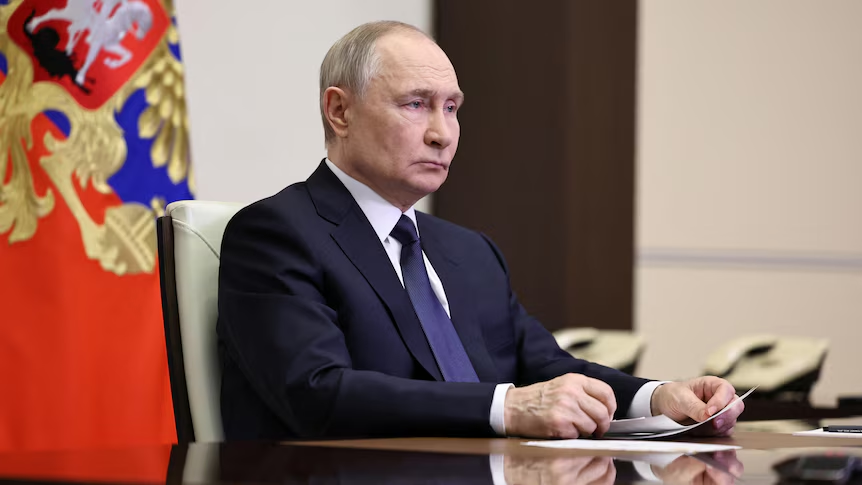
Russia defends nuclear arsenal as arms control treaty era ends
The Kremlin has described nuclear weapons as the world's last line of defence against a global conflict, warning that the international security architecture is steadily weakening amid growing concerns over a renewed arms race among major powers. Speaking at a foreign policy forum in Moscow on Wednesday, Kremlin spokesman Dmitry Peskov said nuclear deterrence remains the primary factor preventing large-scale war between nations. According to him, existing global security mechanisms have been significantly eroded, leaving nuclear capabilities as the most effective deterrent against direct military confrontation between nuclear-armed states. Peskov also cautioned that advances in military technology could eventually produce conventional weapons with destructive capabilities comparable to those of nuclear arms, potentially creating new security challenges in the future. The comments come at a time of heightened geopolitical tensions and months after the expiration of New START, the last remaining nuclear arms control treaty between Russia and the United States. The agreement, signed in 2010, placed limits on the number of deployed nuclear warheads held by both countries and was widely regarded as the final pillar of Cold War-era arms control arrangements. Its expiration marked the first time in decades that no active treaty exists to regulate the deployment of strategic nuclear weapons by the world's two largest nuclear powers. Relations between Moscow and Washington have remained strained, particularly since the outbreak of the war in Ukraine. Russian President Vladimir Putin has frequently referenced Russia's nuclear capabilities during the conflict, drawing criticism from Western governments that accused Moscow of escalating tensions through nuclear rhetoric.
Meanwhile, US President Donald Trump has advocated for a broader arms control agreement that would include China, whose nuclear stockpile has expanded in recent years, although it remains significantly smaller than those of Russia and the United States. China has repeatedly rejected calls to join such negotiations, while Moscow maintains that any future agreement should also include other nuclear powers, including United Kingdom and France. Despite renewed discussions on military communication between Russia and the United States, there has been no indication that negotiations to replace or revive New START are imminent, leaving uncertainty over the future of global nuclear arms control.
#UTVAfrica#