Nigeria, Colombia Sign MoU to Boost Bilateral Ties Across Key Sectors
Nigeria and Colombia have signed a Memorandum of Understanding (MoU) on political consultations, marking a major step forward in strengthening their diplomatic and economic relationship.
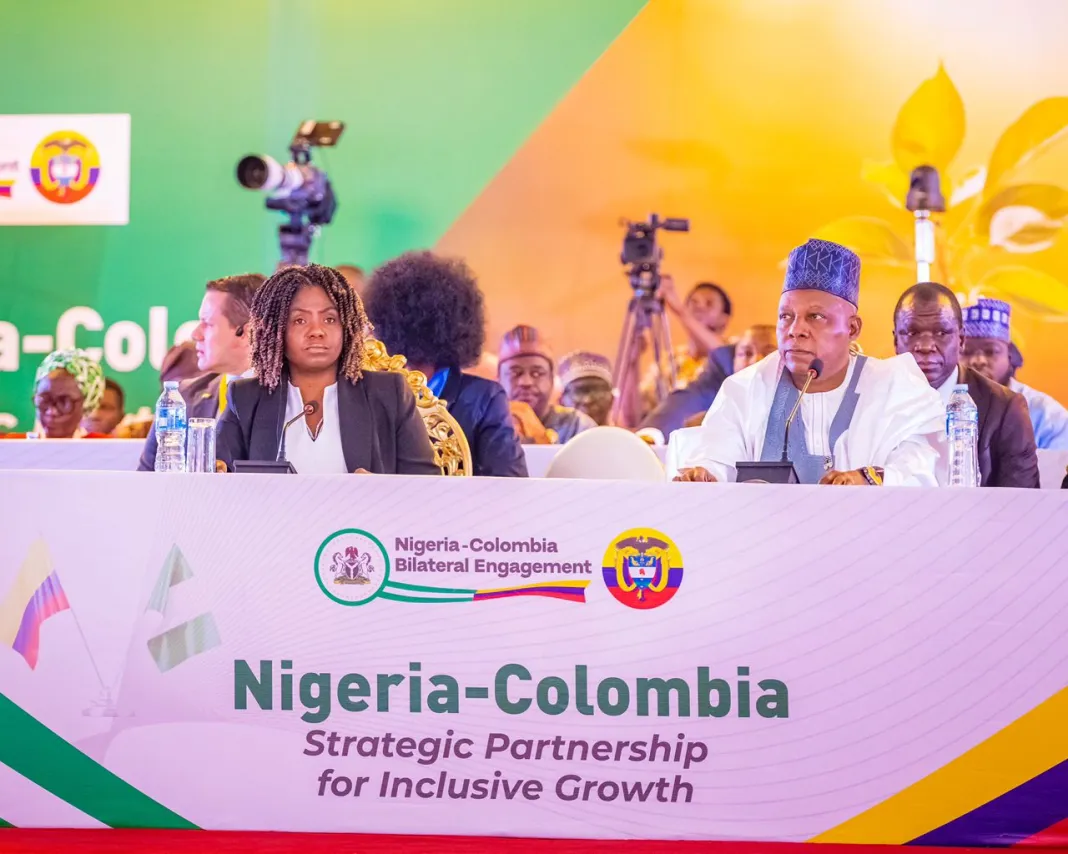
The agreement was formalized on Monday during the Nigeria-Colombia Bilateral Meeting and Business Forum held at the Presidential Villa in Abuja. The MoU is aimed at deepening cooperation in critical sectors such as trade, investment, agriculture, energy, and culture.
Speaking at the forum’s plenary session, Nigeria’s Vice President, Senator Kashim Shettima, emphasized the importance of both countries moving beyond reliance on crude oil by tapping into new areas of economic potential.
“To diversify our economies, we must evaluate our differences and similarities, our resources and capabilities. This will enable us to drive trade and investment, improve agricultural productivity, promote cultural ties, and exchange mutually beneficial ideas,” Shettima stated.
The Vice President noted that Nigeria is committed to transforming its agricultural sector from subsistence-based to a large-scale, business-driven industry. He highlighted ongoing investments in modern livestock breeding, agricultural machinery, and the production of key inputs like fertilizers, herbicides, and pesticides.
“These are areas where Nigeria and Colombia can form strategic partnerships. Both countries have strengths in crops such as cocoa, coffee, and tropical fruits,” he added.
Shettima also identified other promising areas for collaboration, including energy and manufacturing. “Nigeria leads in oil and gas, while Colombia has significant potential in coal and renewable energy. In manufacturing—from textiles to machinery,there is room for cooperation in capacity building, knowledge exchange, and attracting investment that creates jobs and prosperity,” he explained.
He further outlined three key priorities for both nations: monitoring shifts in global trade policies, diversifying export bases, and fostering a business-friendly environment.
“The private sectors of both countries must take the lead in harnessing these opportunities to generate tangible economic outcomes,” Shettima urged.
Highlighting the power of cultural diplomacy, the Vice President stressed the need for collaboration in areas such as cultural exchange, capacity building, digital innovation, skill development, and the protection of intellectual property.
“Culture is a bridge for innovation and mutual prosperity. Nigeria’s creative industry is a key driver for youth engagement. We must deepen our ties through education, science, technology, and cultural initiatives,” he added, encouraging the exchange of literature, music, films, and arts between the two countries.
Colombian Vice President, Mrs. Francia Márquez, described Nigeria as a strategic partner and expressed her country’s interest in expanding cooperation into renewable energy, higher education, and technology.
“We are here to reaffirm Colombia’s commitment to Nigeria. We already export products like leather and are keen to explore renewable energy and academic exchange between our youths,” she said.
Márquez added that the forum provides a platform to explore shared goals in social development, peace, justice, and economic collaboration.
Nigeria’s Minister of Foreign Affairs, Ambassador Yusuf Tuggar, also spoke at the event, emphasizing the long-standing relationship between both nations and underscoring the opportunities for cooperation in agriculture, hydrocarbons, and pharmaceuticals.
In his presentation, Mr. Emmanuel Longza, Deputy Director at the Nigerian Investment Promotion Commission (NIPC), highlighted Nigeria’s vast investment potential, citing its strategic location, large population, and abundance of natural resources.
He noted that Nigeria has 34 million hectares of arable land, with only 46% currently under cultivation—signaling major opportunities in agriculture. He also pointed to the development of industrial parks aimed at driving export-focused industries and attracting foreign businesses.
The MoU is expected to pave the way for expanded partnerships and joint ventures that can drive sustainable development and mutual growth for both nations.
#UTVAfrica#