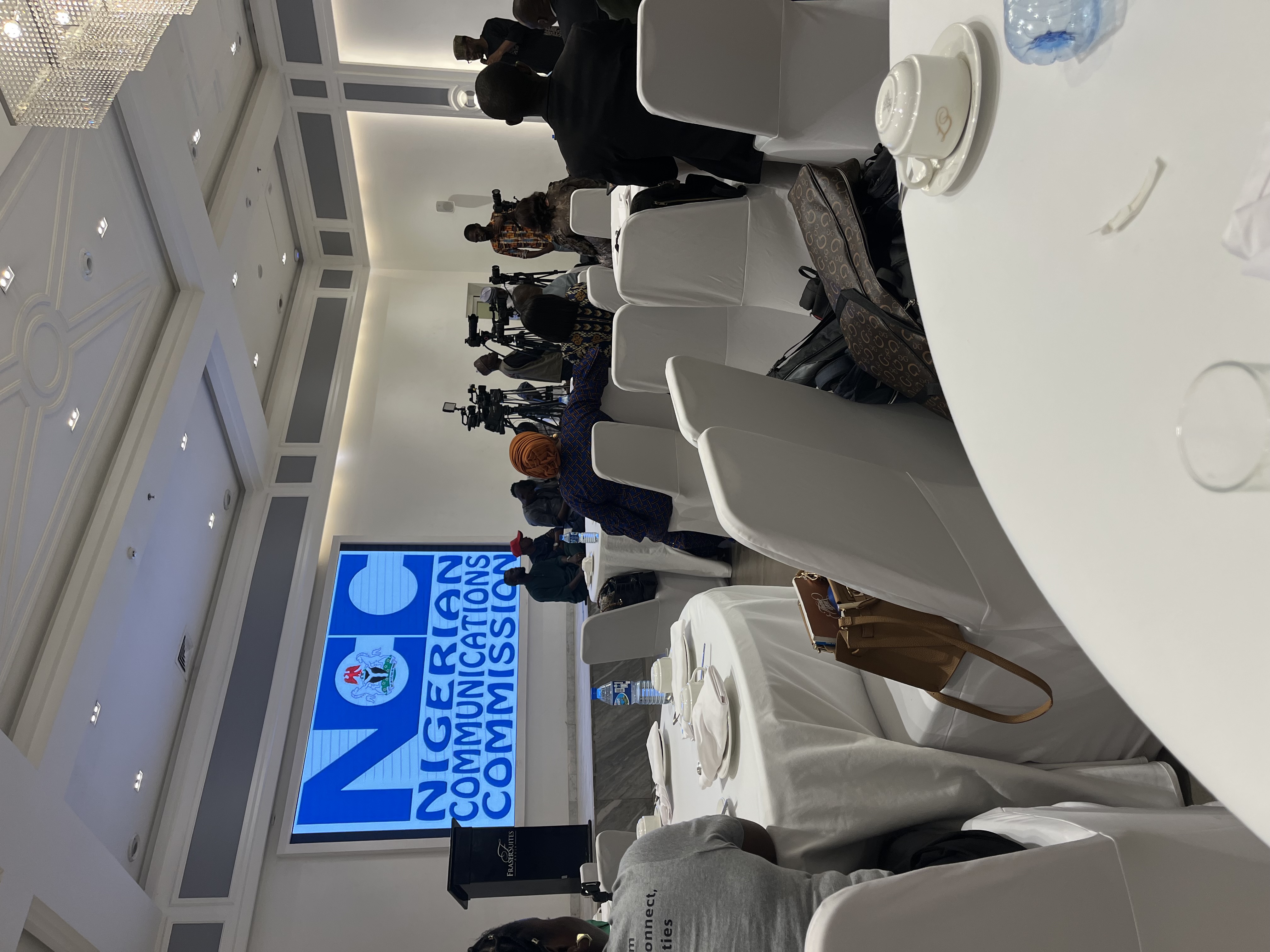
NCC Hosts 2026 Media Breakfast in Abuja, Highlights Telecom Reforms and Service Improvements
The Nigerian Communications Commission (NCC) has called on state governments to strengthen collaboration with telecom operators during road construction, citing Edo State’s approach as an effective model for protecting critical infrastructure.
Speaking at the 2026 Executive Vice Chairman’s Breakfast Meeting with media stakeholders in Abuja, the NCC Executive Vice-Chairman, Dr. Aminu Maida, said the Edo model has significantly reduced fibre cuts and service disruptions.
He explained that the process is straightforward: contractors notify the Commission and telecom operators before commencing construction work, allowing infrastructure owners to take preventive measures.
“In Edo State, contractors send advance notifications before any construction begins, allowing service providers to take necessary precautions. This has greatly reduced cases of damage to telecom infrastructure,” Maida said, noting that the Commission is encouraging other states to replicate the initiative.
On service delivery, the NCC boss said there are early indications of improvement in the quality of telecom services across the country, although more progress is needed.
“We are not yet where we want to be, but we are seeing gradual improvement in service quality,” he stated, adding that increasing data consumption continues to place pressure on network capacity.
Maida revealed that major operators—including MTN Nigeria, Airtel Nigeria, and Globacom—upgraded about 2,800 network sites in 2025. The upgrades involved new deployments, fibre expansion, and migration from legacy 2G and 3G networks to more advanced 4G and 5G technologies.
He added that operators have committed to rolling out approximately 12,000 additional site upgrades and new installations in 2026, a move expected to enhance coverage and improve overall network performance nationwide.
On consumer protection, Maida said the Commission has introduced a compensation framework to ensure subscribers are directly compensated for poor service delivery.
“This initiative is meant to ensure that customers are not left without remedy when service quality drops,” he said, noting that tower companies are also required to invest more in power supply and security infrastructure to support reliable service.
Earlier, the Executive Commissioner for Stakeholder Management, Rimini Makama, stressed the importance of media engagement in driving sector growth.
“A well-informed media helps produce a well-informed public, which is essential for sector growth and accountability,” she said.
Also speaking, the Director of Public Affairs, Nnenna Ukoha, noted that the quarterly engagement provides a platform for open discussions on industry trends and regulatory priorities.
The NCC expressed optimism that sustained collaboration among government, operators, and stakeholders will lead to improved service quality, wider broadband access, and a more resilient digital economy across Nigeria.
By Benita Ibrahim