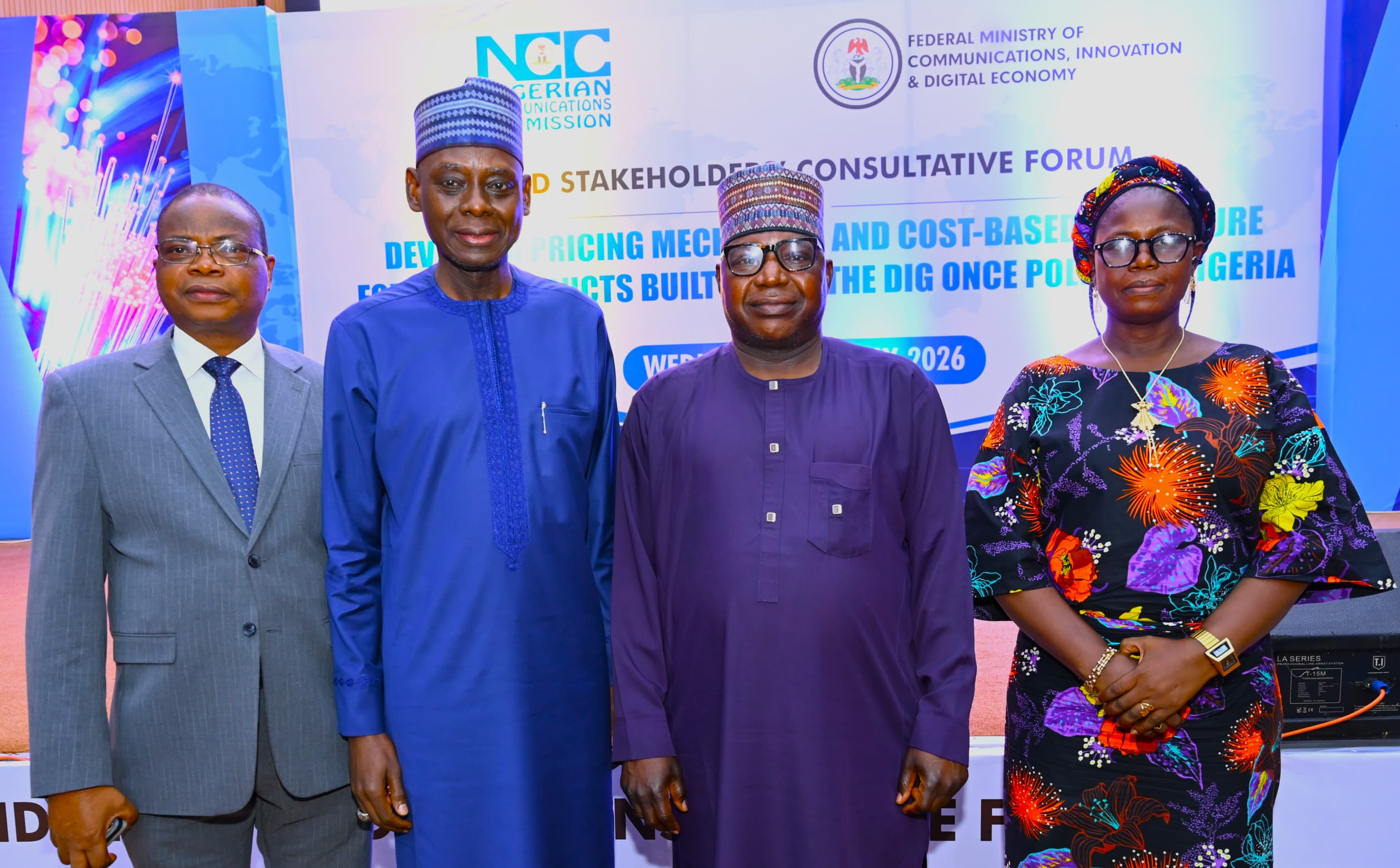
NCC engages stakeholders on cost-based duct-sharing framework to strengthen broadband rollout
The Nigerian Communications Commission (NCC) has intensified efforts to enhance broadband infrastructure deployment by engaging key industry stakeholders on the development of a cost-based pricing framework for sharing underground telecommunications ducts under the Dig Once Policy.
The initiative formed the focus of the Second Stakeholders' Consultative Forum held in Abuja, bringing together representatives of federal and state government agencies, telecommunications operators, infrastructure companies, industry associations, development partners and other stakeholders.
Addressing participants, the NCC's Director of Policy, Competition and Economic Analysis, Ayuba Shuaibu, said the consultation reflects the Commission's commitment to a transparent and inclusive regulatory process aimed at promoting efficient infrastructure deployment and expanding broadband access across Nigeria.
He explained that the proposed framework is designed to establish a fair and transparent pricing mechanism for sharing underground ducts installed under the Dig Once Policy, which encourages the deployment of telecommunications infrastructure during road construction and rehabilitation projects to reduce repeated excavations.
According to Shuaibu, the framework will promote infrastructure sharing, optimise the use of existing assets, lower broadband deployment costs and support the expansion of digital connectivity nationwide.
He noted that the Commission is committed to balancing the interests of infrastructure owners, network operators and consumers while creating an environment that encourages sustained investment in broadband infrastructure.
Shuaibu added that stakeholders' observations and recommendations would be incorporated into the final report to ensure the pricing framework is practical, commercially sustainable and aligned with industry realities.
In a keynote presentation, Managing Director of Dimension Data Limited, Olugbenga Olabiyi, described passive infrastructure—including ducts, conduits and manholes—as one of the most capital-intensive components of broadband network deployment.
He said infrastructure sharing has become a globally accepted strategy for reducing deployment costs, improving operational efficiency and accelerating broadband expansion.
Olabiyi noted that Nigeria's Dig Once Policy presents a significant opportunity to improve coordinated infrastructure deployment, reduce unnecessary road excavations and maximise the utilisation of existing infrastructure.
He stressed that achieving the policy's objectives requires a predictable and equitable access framework, warning that inconsistent pricing models or discriminatory access conditions could discourage investment and limit the benefits of infrastructure sharing.
Stakeholders at the forum reviewed the study's interim findings and offered recommendations on the proposed pricing methodology, implementation strategy and cost elements. The consultation forms part of the NCC's ongoing efforts to develop regulatory frameworks that promote infrastructure sharing, accelerate broadband penetration and support Nigeria's digital transformation agenda.
Benita Ibrahim