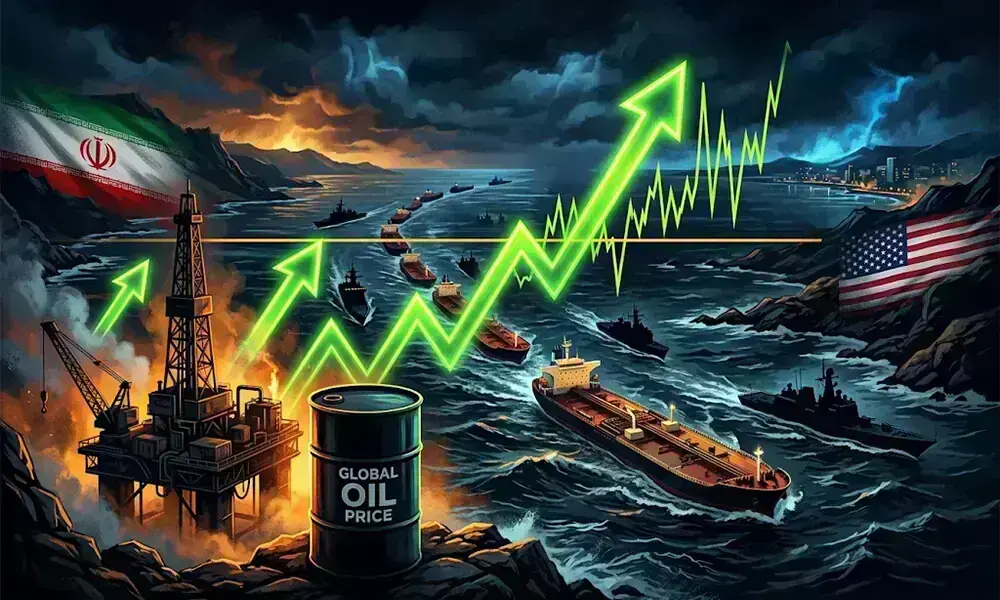
Markets Rebound, Oil Rises After US-Iran Ceasefire Breakthrough
Global markets started the week on a positive note after reports that the United States and Iran had agreed to halt military attacks against each other, easing concerns over a wider conflict in the Middle East. Asian stock markets mostly closed higher on Monday, while oil prices posted modest gains as investors welcomed signs of de-escalation following days of military exchanges that had threatened shipping through the Strait of Hormuz, one of the world's most important oil transit routes. According to US media reports citing senior American officials, Washington and Tehran have agreed to suspend further attacks and resume talks in Qatar on Tuesday. A US official also said technical discussions would continue, allowing commercial vessels to move freely through the strategic waterway. The development follows a tense weekend in which the US military said it struck 10 Iranian military targets in response to attacks on commercial shipping. Iran retaliated by targeting US bases in Kuwait and Bahrain, although both Gulf nations condemned the strikes. Despite the reported breakthrough, tensions remain high. President Donald Trump warned that the US could resume military action if Iran launched further attacks, while Tehran cautioned that attempts to bypass its preferred shipping route could increase regional instability. Oil prices, which had fallen back to pre-conflict levels last week, edged higher as investors assessed the latest developments. Most Asian markets ended in positive territory, with gains recorded in Tokyo, Hong Kong, Shanghai, Sydney, Singapore, Wellington, Taipei, Manila and Bangkok. However, Mumbai and Jakarta closed lower, while European trading was mixed, with London and Paris slipping slightly and Frankfurt posting modest gains.
Technology stocks remained under pressure after heavy losses last week driven by concerns that the artificial intelligence investment boom may be overheating. South Korean chip giants Samsung Electronics and SK hynix extended recent declines, although losses narrowed after Seoul unveiled plans to invest nearly $1.2 trillion in semiconductor manufacturing and AI data centres over the coming years. The South Korean government said Samsung and SK hynix will jointly invest more than $500 billion in a new semiconductor production hub, while additional spending will support the expansion of AI infrastructure nationwide. Meanwhile, the Bank for International Settlements warned that the massive wave of AI-related investment could eventually trigger a sharp market correction if expected returns fail to materialise. Investors are now awaiting key US employment data later this week, with analysts saying the figures could influence the Federal Reserve's next interest rate decision. Stronger-than-expected jobs numbers could reinforce expectations of higher interest rates, while weaker data may boost technology stocks by easing concerns over tighter monetary policy.
#UTVAfrica#