2027 Politics, Christmas Spending Intensify Pressure on Naira
By Zainab Naibi
2 min read
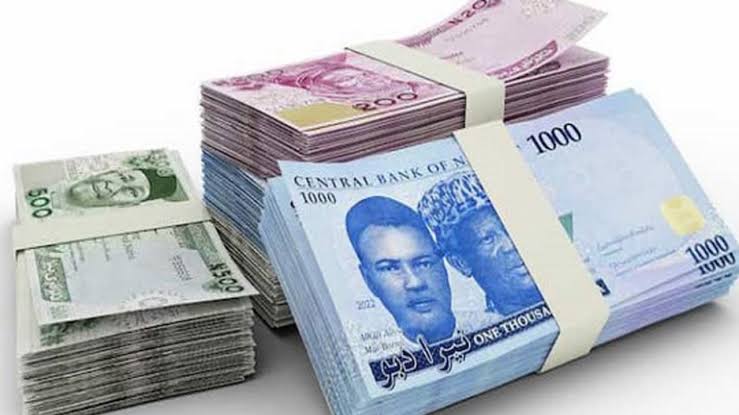
The Naira is facing renewed pressure at the foreign exchange market as increased demand for dollars, attributed partly to political spending ahead of the 2027 general elections and preparations for the Christmas season, weighs on the local currency. The naira depreciated to N1,394 per dollar at the official market on Friday, losing N6, while it traded at N1,460 per dollar at the parallel market on Sunday. The decline at the official market followed another loss of N8.01 on Thursday, when the currency weakened to N1,388 per dollar from N1,379.99 recorded on Wednesday. It had also fallen by N16.99 on Wednesday from N1,363 on Tuesday. At the parallel market, the dollar exchanged for N1,440 on Thursday, compared with N1,375 a month earlier. Some currency traders attributed the growing demand to customers purchasing dollars on behalf of politicians preparing for the next election cycle. A trader in Abuja, Haruna Ibrahim, said some buyers claimed they had been sent by political figures to obtain foreign currency, while another Bureau de Change operator in Lagos said election-related activities were contributing to increased dollar demand.
Chief Executive Officer of the Centre for the Promotion of Private Enterprise, Dr Muda Yusuf, identified political spending, capital flight and policy uncertainty as possible factors contributing to the naira’s depreciation and pressure on foreign reserves. He explained that political spending could increase liquidity in the economy and place additional pressure on the exchange rate, particularly where foreign currency transactions are conducted through the parallel market. Yusuf also warned that uncertainty surrounding economic policies, including statements by some politicians about reversing the Tinubu administration’s reforms, could encourage capital flight. Meanwhile, emerging markets expert and economist Ike Ibeabuchi attributed the currency’s weakness to declining dollar inflows from exporters and investors alongside sustained demand for imports and international transactions. He added that the Christmas season typically increases foreign exchange demand, while the impact of election-related spending could further intensify pressure on the currency. The development comes as Nigeria’s foreign reserves declined to $54.65bn on Friday from $54.713bn recorded the previous day, representing a drop of $60.63m.
#UTVAfrica#